
Are you looking for a simple yet effective way to manage your retail team’s daily tasks? A well-organized daily team schedule isn’t just a to-do list; it’s a powerful tool for boosting productivity, clarity, and team morale. This isn’t just about telling people what to do—it’s about creating an efficient, engaging workflow for your entire team.
What Is a Daily Team Schedule?
A daily team schedule is a detailed, hour-by-hour breakdown of each team member’s activities. It’s the “who, what, and when” of your day-to-day operations. This simple planning tool ensures that everyone knows their role and responsibilities, minimizing confusion and maximizing output. The benefits of organizing your team’s daily activities, hour by hour, have already been described in my previous blog posts: The Day-to-Day of a Store: Tricks to Make It More Manageable – PART 1 and The Day-to-Day of a Store: Tricks to Make It More Manageable – PART 2
As a store manager, you can use this plan to:
- Assign specific tasks to team members.
- Track progress on key activities.
- Align the team’s efforts with business goals.
Two Golden Rules for an Effective Schedule
No matter the size of your team, keep these two rules in mind when building your schedule:
- Keep it Simple and Readable for Your Team: A complex schedule is useless. Make it easy for your team to understand at a glance.o
- Color-code tasks for quick identification (e.g., green for sales, blue for stockroom).
- Use only the essential columns—don’t overcrowd the layout.
- Display it where everyone can see it, whether it’s a printed copy in the backroom or a shared digital file.
- Make it Fast and Easy to Create for the Manager: Your time is valuable. The planning process should be quick, not a burden.
Use a simple Excel spreadsheet or a dedicated digital app. - Choose a method that works for you and your team. The goal is efficiency, not perfection.
Creating Your Schedule: Small vs. Large Teams
The best layout depends on your team’s size.
For Teams of 5 or Fewer
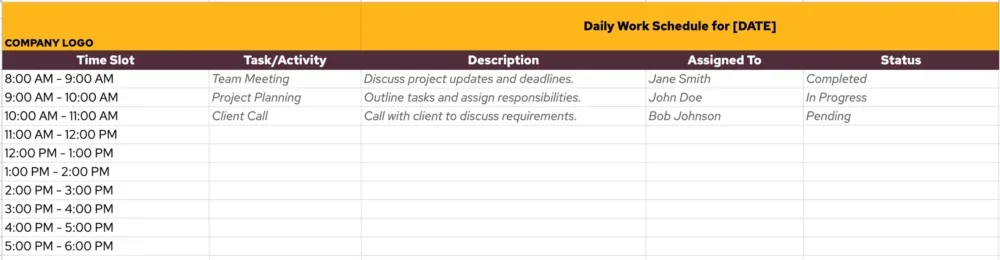
For smaller teams, a simple table is perfect. Create a layout with three main columns:
- Time Slots (e.g., 9:00 AM, 10:00 AM)
- Activities (e.g., Stock Replenishment, Customer Service)
- Team Member Assigned (e.g., Alex, Maria)
You can also add an optional fourth column for Status (e.g., pending, in progress, complete) to help with task tracking throughout the day.
For Larger Teams
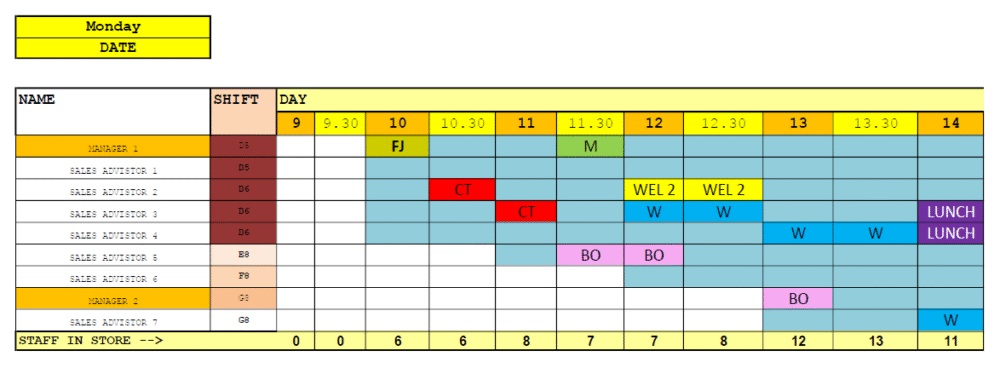
When you’re managing a larger crew, you need a different view. Use a grid format to get a quick overview of who’s on the floor at any given time.
- Rows: List your team members’ names.
- Columns: Use the store’s operating hours (e.g., 10:00 AM, 10:30 AM, 11:00 AM).
This format allows you to see staffing levels and assigned tasks hourly. It helps you ensure you have enough people on the sales floor during peak hours and that all tasks are covered.
The Daily Plan: A Tool for Better Rostering
Your daily schedule is more than just a short-term plan; it can be a powerful tool for fine-tuning your monthly roster. By tracking your daily needs, you can make smarter decisions for the future.
- Adapt Staffing to Customer Traffic: Use data from your daily plans to adjust the number of team members you schedule on a specific day. If Mondays are always slow, you can reduce staffing to save on costs.
- Match Skills to Customer Demographics: If you notice a high volume of Spanish-speaking customers on weekends, you can schedule team members with Spanish language skills to better serve them.
- Prioritize Less Urgent Tasks: Use the schedule to concentrate less urgent tasks like inventory counts or deep cleaning on days with low customer traffic or when you have more staff available.
Ready to Optimize Your Team?
A solid daily schedule is the backbone of a successful retail operation. It reduces stress, improves communication, and empowers your team. By using these simple strategies, you can transform your store’s workflow and boost your bottom line.
Have a specific challenge or want a custom plan for your business? I can help. Feel free to contact me directly to discuss how we can build a planning strategy that fits your unique needs. Let’s work together to make your team more efficient and your business more profitable.